
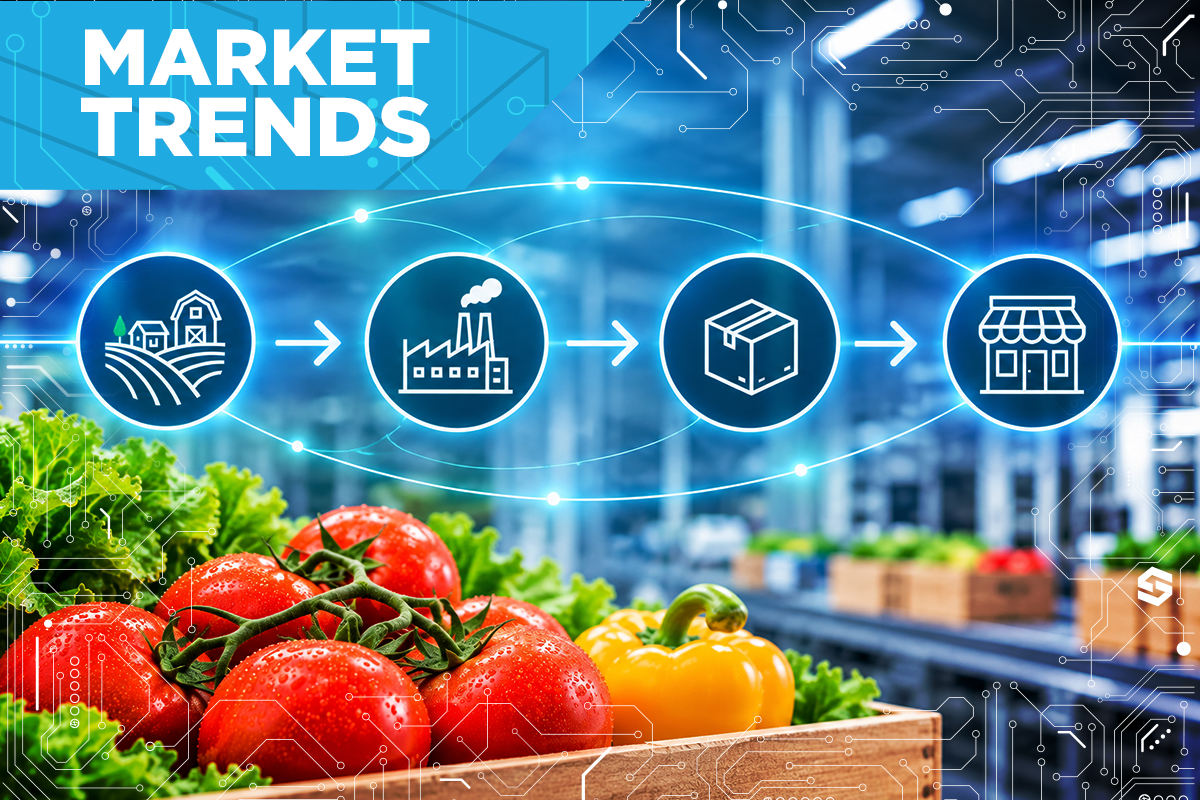
FSMA 204 readiness: building smarter food traceability solutions
Turn readiness into opportunity
As foodservice organizations evaluate readiness for FSMA 204, many are discovering that food traceability is about more than compliance. The ability to capture, manage, and retrieve product data quickly is becoming an important operational capability that can improve visibility, efficiency, and response times across the supply chain.
Rather than focusing on individual products, partners can help their end customers build connected food traceability workflows that bring together data capture, mobility, software, labeling, and network infrastructure. For partners, traceability projects can open conversations that extend beyond scanning hardware to include mobility, software integration, networking, services, training, and ongoing support. By understanding how information moves through an operation, partners can recommend solutions that support both compliance goals and day-to-day performance.
What customers should know about FSMA 204
FSMA 204, the FDA’s Food Traceability Rule, requires additional recordkeeping for businesses that manufacture, process, pack, or hold certain foods on the FDA’s Food Traceability List (FTL). The goal is to improve the industry’s ability to quickly identify and remove potentially contaminated food from the supply chain.
For foodservice organizations, three key concepts matter:
· Key Data Elements (KDEs): Information that must be captured and maintained.
· Critical Tracking Events (CTEs): Activities where information must be recorded, such as receiving, shipping, and transformation.
· 24-hour record retrieval: Covered organizations must be able to provide requested traceability records to the FDA within 24 hours, or another reasonable timeframe agreed upon by the agency.
Applicability and exemptions vary by business and product type, and customers should evaluate how the rule applies to their specific operations. While enforcement has been extended until July 20, 2028, organizations should treat the added time as an opportunity to prepare, assess workflows, and address technology gaps.
Solution spotlight: build around the customer’s workflow
Instead of leading with individual products, partners can help customers build practical traceability strategies that align people, processes, and technology. Barcode scanning, mobile computing, software, labeling, networking, and connectivity all play a role in creating a more complete traceability workflow. The most effective conversations don’t start with products, they start with understanding how customers receive food products, capture traceability information, and retrieve records when needed. Once gaps are identified, technology can be aligned to support those processes.
Receiving
For many foodservice customers, preparing for FSMA 204 starts at the receiving dock. If traceability information is still being manually entered from supplier paperwork or labels, the process can be slow, inconsistent, and prone to errors. This is where barcode scanning can make an immediate impact. Solutions like Brady Xenon Ultra or Datalogic Gryphon™ 4600 can help teams capture available data directly from barcodes, reducing manual entry requirements while improving receiving accuracy.
Mobility beyond the receiving dock
As products move through operation, mobile devices bring traceability processes closer to where work happens. Solutions such as Havis mounting solutions, Toshiba TCx M11, and Zebra Technologies TC 22-27 Mobile Computers support receiving, delivery verification, exception management, and lot-code validation without requiring employees to return to a fixed workstation.
Labeling and identification
For customers that use internal labeling, printers, and supplies help ensure product information remains readable and connected to records throughout storage and handling. The focus should be on selecting supplies that fit the operating environment and support the overall workflow.
Turning data into action
Captured data must be organized and accessible. Traceability software helps associate information with products, lot codes, and key business events while making records easier to store, exchange, and retrieve when needed.
The importance of connectivity
Finally, none of these solutions operate effectively without reliable connectivity. Wireless networking, internet access, and system synchronization are often the foundation that enables scanners, mobile devices, and software platforms to work together seamlessly.
The opportunity isn’t to sell individual devices. It’s to help customers build a connected traceability workflow that supports their operational and compliance goals.
Customer discovery: starting a better conversation
Before recommending a solution, it is important to focus on understanding the customer’s current process. Consider asking:
· Which foods and activities in your operation fall under FSMA 204 requirements?
· How do you currently receive and retain supplier traceability information?
· Can your team quickly locate and retrieve required records?
· Where do manual processes create inefficiencies or create risk?
· Are there disconnected systems or connectivity gaps impacting visibility?
· What would a successful program look like?
The answers can help identify opportunities and create a phased roadmap that grows overtime, starting with a targeted pilot and expanding as requirements and operational needs evolve.
ScanSource’s role: supporting a complete solution
Helping customers prepare for food traceability readiness requires more than recommending individual solutions. ScanSource can help partners:
· Evaluate the appropriate mix of devices, printers, supplies, and infrastructure.
· Identify software sourcing and integration requirements.
· Build phased deployment strategies.
· Create recurring opportunities.
· Support employee adoption, training opportunities, and ongoing support.
By approaching FSMA 204 readiness as a technology conversation, partners can strengthen customer relationships and expand solution opportunities.
Take the next step
Foodservice customers are evaluating how they will capture, connect, and retrieve traceability data. Now is the time to help them build a practical roadmap. By combining barcode scanning, mobile computing, traceability software, labeling solutions, and connectivity infrastructure, partners can help foodservice organizations build a scalable food traceability solution that supports both operational efficiency and FSMA 204 readiness.
Contact your ScanSource sales representative to discuss customer requirements, identify technology gaps, and explore available hardware, connectivity, and solution options that support traceability readiness.